
Introduction: The Paradigm Shift in Search Engine Algorithms
In the rapidly transforming digital landscape of 2026 the criteria for ranking on the first page of search engines have undergone a fundamental shift. Gone are the days when SEO success relied solely on technical backend optimizations or the sheer number of backlinks. Today user experience UX readability and content digestibility take center stage. Google’s latest core updates now evaluate how well information is communicated to a human reader.
Content that is structurally sound but linguistically dense is increasingly penalized in search rankings. As a result, digital writers, content strategists, and SEO specialists must adopt precision-oriented tools that bridge the gap between human readability and algorithmic assessment.
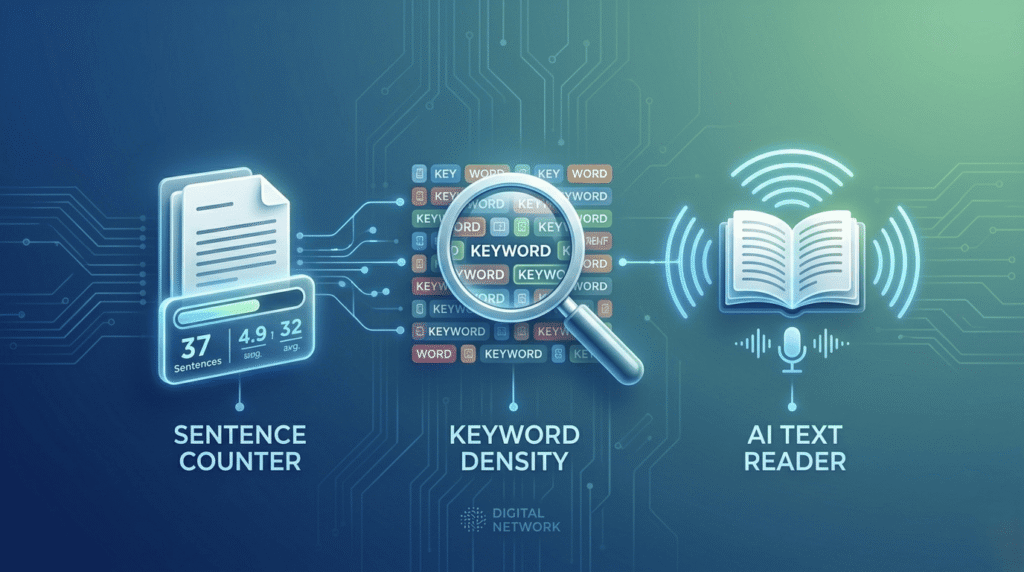
Platforms like the Sentence Counter Tool are essential for auditing sentence structure, enhancing readability, and creating content that resonates with both readers and search engines.
The Strategic Importance of Sentence Counting in UX
Understanding Reader Engagement and Retention
With human attention spans now averaging just eight seconds, every sentence in your content represents a potential exit point for the reader. A long, convoluted sentence can overwhelm readers, resulting in content fatigue where they abandon the page before engaging with the key information.
This is where a sentence counter tool becomes invaluable. It allows writers to:
- Measure sentence length
- Identify overly complex sentences.
- Maintain a balanced writing rhythm
In 2026, high-ranking content follows a varied cadence, combining short, punchy sentences with medium-length explanatory sentences. This improves dwell time, a critical ranking factor for modern search engines.
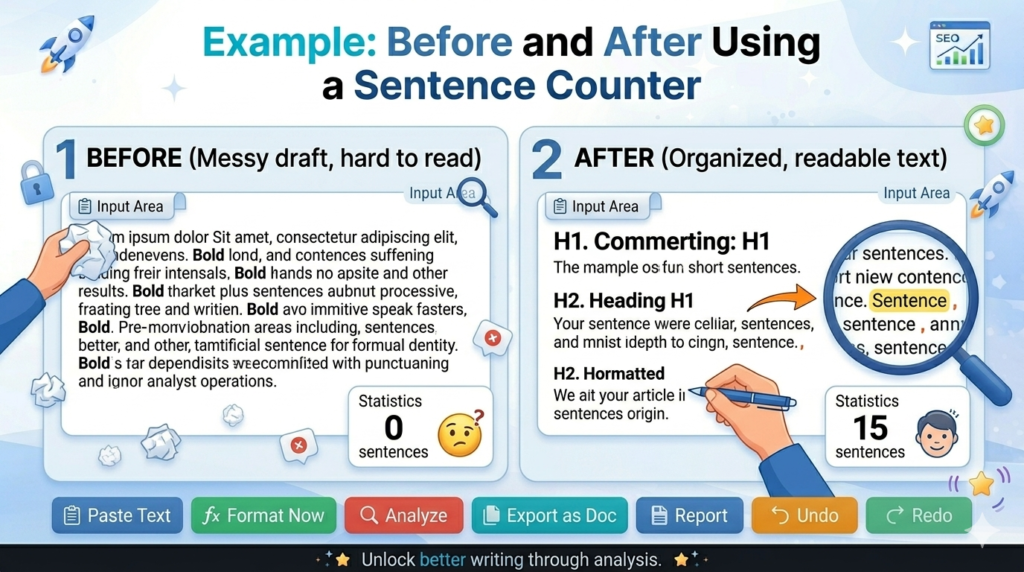
Example: Before and After Using a Sentence Counter
- Before:
In order to ensure optimal content performance, it is essential that writers consider not only technical SEO but also sentence structure and readability, which directly affect user engagement and retention metrics. - After:
Writers must focus on more than SEO. Readability and sentence structure directly impact engagement. Poor structure increases content fatigue.
Notice how splitting one long sentence into three improves clarity and ease of reading.
Optimizing for MobileFirst Indexing
With over 80% of global web traffic coming from mobile devices, text layout is just as important as content quality. On mobile screens, a single 30-word sentence can appear as a wall of text, discouraging users from scrolling further.
By using the Sentence Counter Tool, writers can break down content into digestible, mobile-friendly chunks, improving:
- Reading speed
- User retention
- SEO rankings
Mobile-first indexing favors content that is scannable with short sentences, bullet points, and clear headings. Breaking up content with sentence counters ensures your article remains engaging on all devices.
Precision Engineering with Keyword Density
Avoiding OverOptimization and AI Penalties
Keyword density is no longer about repetition. Search engines now use advanced NLP algorithms to detect overuse, which can trigger penalties. Exceeding the safe keyword frequency, typically 11.5, can result in content being flagged by Google’s SpamBrain AI.
The Keyword Density Checker allows you to:
- Measure real-time keyword frequency
- Identify overoptimized phrases
- Maintain natural, readable content.
How to Use the Keyword Density Checker Effectively
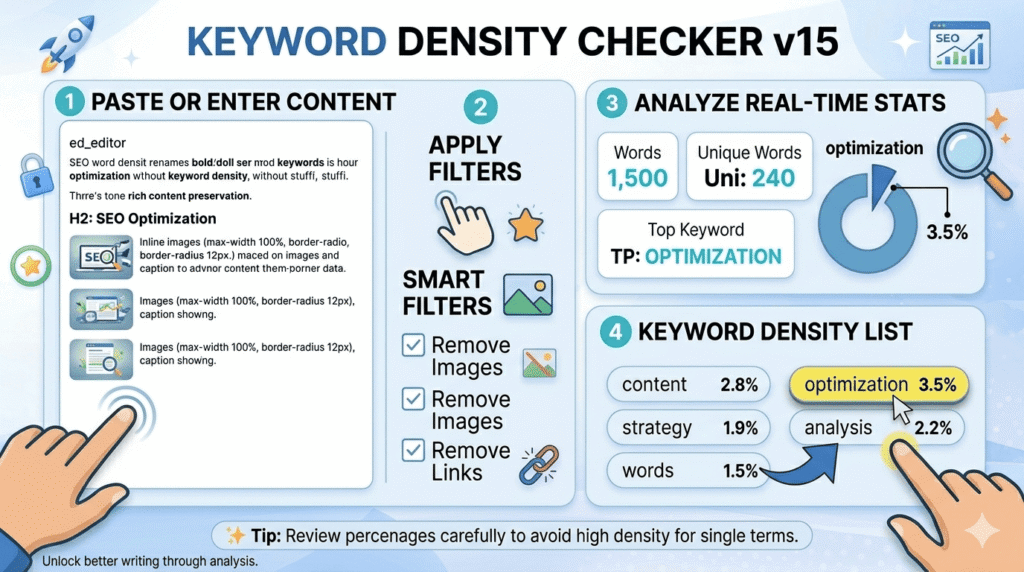
- Paste your article into the tool window.
- Observe keyword frequency percentages.
- Adjust overused keywords to stay within the safe range of 0.81. 2.
- Ensure LSI keywords are evenly distributed.
By following these steps, your content remains human-readable while optimized for search engines.
Maintaining Editorial Integrity
Most traditional SEO tools strip formatting during analysis, removing bold text headings and hyperlinks. This forces writers to spend hours reformatting.
The Keyword Density Checker preserves all formatting, allowing live editing while auditing keyword density. Features include:
- Retained HTML or Markdown formatting
- Bold italic and hyperlink preservation
- Realtime keyword alerts
This workflow saves time, improves efficiency, and ensures high-quality publication, particularly for agencies and high-volume bloggers.
MultiModal Accessibility and AI Content
The Rise of Voice Search
In 2026, content is multimodal. Text alone no longer guarantees engagement. Voice search and AI assistants now account for a significant portion of queries.
Using an AI text reader, content can be converted to high-quality audio, allowing users to:
- Consume content while multitasking
- Listen during commutes, workouts, or chores.
- Engage with longer articles without visual fatigue
SEO Benefits of Audio Accessibility
- Increased session duration
- Higher dwell time
- Better perceived authority by search engines
Neural Text-to-Speech: Humanizing Content
Robotic TTS systems often disengage users due to unnatural cadence. Modern AI text readers mimic human intonation, stress patterns, and emotional nuance, creating a parasocial connection with the audience.
By using AI Text Reader, writers can:
- Build brand trust
- Encourage repeat visits
- Improve clickthrough rates
These are key elements of the EEAT framework (Experience, Expertise, Authority, Trustworthiness), which Google uses to evaluate high-value content.
The Integrated SEO Workflow: From Draft to Publish
To create high-ranking content, follow this three-step workflow:
Step 1: Structural Optimization with Sentence Counting
Use the Sentence Counter Tool to audit:
- Sentence length and variety
- Paragraph balance
- Headings and subheadings
Example: A 1500-word article with 20 excessively long sentences may see higher bounce rates. Adjusting sentences increases user retention and improves mobile readability.
Step 2: Keyword Optimization with Density Analysis
Next, use the Keyword Density Checker to fine-tune:
- Primary keywords
- LSI Latent Semantic Indexing keywords
- Meta titles and descriptions
By maintaining optimal keyword balance, your content is algorithm-friendly without sounding spammy.
Step 3: Accessibility Optimization with AI Audio
Finally, run the article through the AI Text Reader. Benefits include:
- Detecting awkward phrasing
- Improving sentence flow
- Providing an auditory experience for readers
Auditory review often reveals issues that visual reading alone cannot detect, making your article triple optimized.
Mobile UX and Visual Readability
Break Content into Scannable Blocks
Long paragraphs are hard to read on mobile. Use:
- Bullet points
- Short sentences
- Headings H2/H3
Example:
- Use the Sentence Counter Tool to check sentence lengths.
- Ensure no sentence exceeds 2530 words.
- Create visually scannable content for faster reading.
Visual Friction and Engagement
Visual friction occurs when text overwhelms users, reducing scroll depth. Reducing sentence length and adding bullet points improves user retention.
Statistics in 2026 show mobile users spend 3050 more time on pages with optimized readability.
Voice Search Optimization Strategies
- Use conversational language for AI assistants.
- Integrate FAQs for direct answers
- Include long-tail keywords naturally.
The AI Text Reader can convert FAQ sections into audio, increasing session duration and engagement.
Example: Users searching for the best SEO tools in 2026 may stay longer on a page if they can listen to a detailed guide.
FAQs
1. Why is sentence structure critical for SEO?
Short, well-structured sentences increase readability, dwell time, and reduce bounce rates.
2. What keyword density is ideal in 2026?
Keep primary keywords between 0.81 and 1.2 to avoid AI penalties.
3. How does a keyword density checker help?
It provides a real-time frequency map of your keywords, helping maintain a natural flow.
4. Why should I use an AI text reader?
It offers multimodal accessibility, improves engagement, and supports voice search optimization.
5. Can these tools improve rankings?
Yes. Using sentence counters, keyword checkers, and AI readers creates high-performance content optimized for both humans and search engines.
Conclusion:
The digital landscape in 2026 demands content that is engineered for humans and algorithms alike. By:
- Optimizing sentence structure with the Sentence Counter Tool
- Finetuning keywords with Keyword Density Checker
- Enhancing accessibility with AI Text Reader
You transform ordinary content into high-performance digital assets.
Success in SEO today is not just about writing; it’s about crafting content ecosystems that engage users, satisfy search engines, and remain future-proof. By leveraging these tools, writers, bloggers, and agencies can achieve the top 1 rankings, increase engagement and maintain authority in the digital space.engagement,
Related Reading: Check out our official summary on Medium: How to Write High-Ranking SEO Content in 2026.